

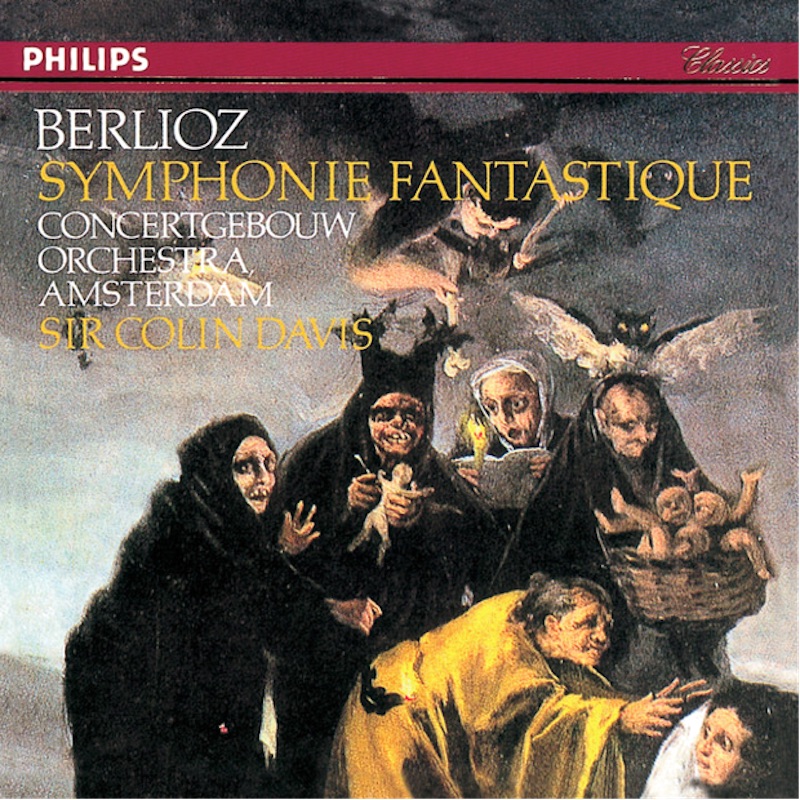
Poucas obras de música clássica são tão amadas quanto a Sinfonia Fantástica de Berlioz. Trata-se da obra de música programática mais conhecida do repertório (assim como as obras de Mussorgsky). Berlioz compôs essa peça enquanto estava apaixonado por uma atriz irlandesa chamada Harriet Smithson. É uma obra dividida nas seguintes partes:
2. “Um Bail
3. “Cena no Campo”
4. “Marcha para o Cadafalso”
5. “Sonho de uma Noite de Sabá”
Cada seção representa a vida de um artista que, assim como Berlioz, apaixonou-se por alguém. O Artista na Sinfonia representa o próprio Berlioz. Vamos analisar cada parte para que se possa apreciar a obra; embora Berlioz considerasse “indispensáveis” as notas que forneceu sobre ela, teremos de abordar os pontos de forma mais sucinta, por brevidade.
“Rêveries – Passions” (Devaneios e Paixões) é a primeira parte. O artista está sacudido de amor por sua amada. Surge uma idée fixe (ideia fixa): uma melodia musical associada a esse amor. Essa idée fixe reaparecerá ao longo da obra. A primeira parte da sinfonia reflete a própria vida de Berlioz.
“Um Baile” é a segunda parte. O artista encontra-se em um magnífico baile, dançando uma valsa ao som de harpas, enquanto a idée fixe de sua amada — que não se encontra em lugar algum — se manifesta. A música é emocionante e nos convence de que estamos no baile junto com o artista.
“Cena no campo” é a próxima parte da nossa obra. Nela, o artista imagina-se no campo, auxiliando pastores com seus rebanhos. A idée fixe retorna mais uma vez. O artista ouve trovões e chuva e, em seu desespero, ingere uma dose elevada de ópio que o faz alucina.
A quarta parte da sinfonia é a “Marcha para o Cadafalso”. Para aqueles que não estão familiarizados com o termo, o cadafalso está associado a um método brutal de execução que envolvia quebrar o pescoço da vítima após um lento estrangulamento. Este movimento da sinfonia retrata o artista alucinando que assassinou sua amada e que marcha para a própria morte. Berlioz emprega novamente a idée fixe… ela surge pouco antes do golpe final contra o artista matando ele.
“Songe d’une nuit du sabbat” (Sonho de uma noite de sabá) é o movimento final da Symphonie Fantastique e talvez a parte mais conhecida. O artista desperta, horrorizado, dentro de um caixão repleto de ratos. Seu funeral está sendo celebrado. Bruxas entoam o “Dies Irae” em tom de paródia; a idée fixe reaparece, mas sob uma forma grotesca e literalmente irreconhecível. O sabá das bruxas termina com o surgimento da amada — para horror do artista — em meio às bruxas, que se entregam a uma dança e a um delírio infernal.
Assim se encerra a nossa review da Symphonie Fantastique! Para os admiradores de Wagner, é a partir da idée fixe desta sinfonia que surgiu uma forte inspiração para os Leitmotive — elementos centrais para a compreensão de suas óperas. Aos que apreciaram a Symphonie, sugiro as obras de Modest Mussorgsky, que também se enquadram no gênero de música programática, bem como Pinheiros de Roma, de Respighi, entre outras composições semelhantes.
Para quem deseja uma boa interpretação da “Symphonie”, apresento abaixo um link para uma apresentação magnífica da obra, executada pela Orquestra Filarmónica da Rádio França sob a regência de Myung-Whun Chung:
Bibliografia:
https://pad.philharmoniedeparis.fr/0301457-symphonie-fantastique-de-hector-berlioz.aspx?_lg=fr-FR
http://www.hberlioz.com/Scores/fantas.htm
Biografia do autor do artigo: Rafael Kopp Alvarez Procopiak nasceu no Brasil. Brasília, Distrito Federal. Iniciou estudos em Washigton, DC onde cumpriu o pré-escolar e o início da educação primária. Nessa época, acompanhou os pais (ambos diplomatas) juntamente com as duas irmãs. Em seguida, a família foi transferida para Moscou, onde prosseguiu os estudos na American School. De volta ao Brasil, continuou na American School em Brasília. Nos anos seguintes, viveu na Argentina, México e Canadá.
Na Argentina, prosseguiu os estudos na ST.George’s School, escola inglesa vinculada ao sistema educacional britânico. No México, cursou parte da secundária na “Greengates School”, também de orientação britânica, e no Canadá , Toronto, finalizou a secundária. Em Montreal, ingressou e concluiu o Bachelor’s degree in Psichology, onde foi destacado na Dean’s Letter dentre os 100 melhores estudantes da Universidade. (Concordia University) Rafael também colaborou como voluntário se integrando na equipe de boas vindas aos novos alunos apresentando o campus da universidade. Em Portugal, Faro, trabalhou também como voluntário na charitable borganization “Existir”. Como parte do programa de Mestrado em Turismo, que concluiu na Unviversidade do Algarve, Rafael foi co-autor de artigos publicados em revista britânica especializada em lazer e turismo.
The fantastic Symphonie Fantastique!
Few works of classical music are as loved as the Symphonie Fantastic of Berlioz. This is the most well known work of Programme music in the repertoire. Berlioz wrote this piece while infatuated by an Irish actress by the name of Harriett Smithon. It is a work divided into the following parts:
1.”Rêveries – Passions” (Daydreams and passions)
2. “Un bal” (A ball)
3.”Scène aux champs” (Scene in the country)
4.”Marche au supplice” (March to the scaffold)
5.”Songe d’une nuit du sabbat” (Dream of a night of the sabbath)
Each section is represents the life of an artist who like Berlioz was enamored by someone. Let us discuss each part so that one can enjoy the work, Berlioz considered the notes he gave for the work “indispensable” however we shall have for brevity have to skim through things.
“Rêveries – Passions” (Daydreams and passions) is the first part. The artist is infatuated with love for his beloved. An idée fixe presents itself: a musical melody which is associated with his love. Throughout the work this idée fixe will present itself. The first part of the Symphonie models itself as the life of Berlioz himself.
“A ball” is the second part. The artist is in a wonderful musical ball in a waltz with the beauty of a harp showcasing itself along with the idée fixe of his beloved which is nowhere to be found. The music is emotional and convincing that we are in a bal along with the artist.
“Scene in the countryside” is the next part of our programme. Here the artist envisions himself in the countryside aiding Shepherds with their herds. The idée fixe returns once more. The artist heres thunder and rain and in his despair takes a heavy dose of Opium.
The fourth part of the Symphonie is the “March to the Scaffold”. For those unfamiliar with what a scaffold is it is a brutal execution method involving snapping the victims neck after slowly choking the victim. This movement of the Symphonie depicts the artist hallucinating that he has murdered his beloved and is marching to his death. Berlioz once again employs the idée fix…it comes before the final blow to the artist.
“Songe d’une nuit du sabbat” (Dream of a night of the sabbath) is the final movement of the Symphonie fantastique. The artist wakes up to his horror in a coffin with mice in it. His funeral is being celebrated. Witches are singing the “Dies Irae” as a parody, the idée fix reappears but as a grotesque form which is literally unrecognisable. The witch’s sabbath ends with the beloved appearing to the artists horror amongst the witches which are in an infernal dance and reverie.
Thus concludes the Symphonie Fantastique! For those who love Wagner it is from the idée fix of the Syphonie that the “Leitmoti” core to understanding his operas emerged as a strong inspiration. This writer suggests for those who have enjoyed the Symphonie that the works of Modest Mussorgsky are similarly programme music, not to mention Respighi’s “Pines of Rome” amongst other similar works.
For those wishing for a good rendition of the Symphonie underneath is a link to a wonderful performance of The Orchestre philharmonique de Radio France conducted by Myung-Whun Chung of the work:
Bibliography:
https://pad.philharmoniedeparis.fr/0301457-symphonie-fantastique-de-hector-berlioz.aspx?_lg=fr-FR
http://www.hberlioz.com/Scores/fantas.htm
Author biography: Rafael Kopp Alvarez Procopiak was born in Brazil. Brasília, Federal District. He began his studies in Washington, DC, where he completed pre-school and early elementary school. At that time, he accompanied his parents (both diplomats) along with his two sisters. The family then moved to Moscow, where she continued her studies at the American School. Back in Brazil, she continued at the American School in Brasilia. In the following years, he lived in Argentina, Mexico and Canada.
In Argentina, he continued his studies at ST. George’s School, an English school linked to the British education system. In Mexico, he attended part of secondary school at the Greengates School, also British, and in Canada, Toronto, he finished secondary school. In Montreal, he entered and completed his Bachelor’s degree in Psychology, where he was featured in the Dean’s Letter as one of the university’s top 100 students. (Concordia University) Rafael also worked as a volunteer on the team welcoming new students and introducing them to the university campus. In Portugal, Faro, he also worked as a volunteer for the charitable organization “Existir”. As part of the Master’s programme in Tourism, which he completed at the University of the Algarve, Rafael co-authored articles published in a British magazine specializing in leisure and tourism.
Leia também: O brilho de Parsifal | Por Rafael Procopiak [em português e inglês]

O Europe Direct Algarve faz parte da Rede de Centros Europe Direct da Comissão Europeia. No Algarve está hospedado na CCDR Algarve – Comissão de Coordenação e Desenvolvimento Regional do Algarve.
CONSULTE! INFORME-SE! PARTICIPE! Somos a A Europa na sua região!
Newsletter * Facebook * Twitter * Instagram