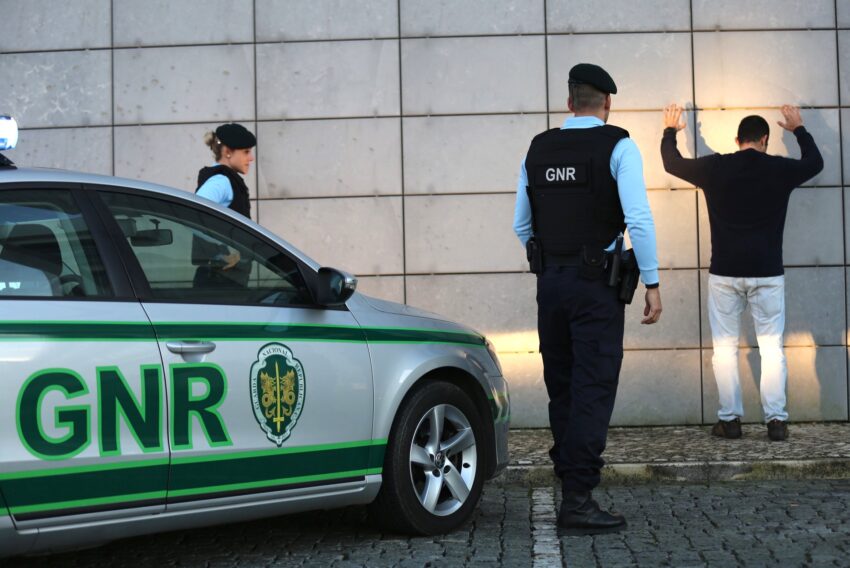
O Povo Cigano progrediu consideravelmente desde antes do 25 de Abril. Dos horrores das masmorras da PIDE e das câmaras de tortura repletas de ciganos empobrecidos da classe baixa, aos atuais membros plenamente ativos da classe média alta, eles adquiriram muitos direitos que antes eram impensáveis antes do regime de Salazar. A Constituição de 1976 era clara: “Todos os cidadãos têm a mesma dignidade social e são iguais perante a lei”. Antes disso, os ataques à comunidade cigana eram severos e calculados.
Antes de 1974, havia uma comunidade religiosa homogênea entre os ciganos. Eles eram majoritariamente católicos, com uma minoria ortodoxa. Após 1974 e o 25 de Abril, surgiram algumas comunidades evangélicas significativas. Este foi um efeito duradouro da revolução. Em 1979, a Igreja Evangélica Filadélfia Cigana de Portugal foi fundada por um grupo de ciganos protestantes. Desde então, o número de ciganos protestantes aumentou significativamente, com muitos ciganos pentecostais. Os romani tornaram-se mais diversificados religiosamente nos últimos anos.
Antes do 25 de Abril, a população cigana vivia, em grande parte, em guetos. Até hoje, os ciganos são excluídos e vivem em seus próprios bairros, mas isso foi instituído por lei e por procedimentos formais antes de 1974. Era uma repressão oficial patrocinada pelo Estado. No entanto, em muitos aspectos, a situação não melhorou. Em termos puramente econômicos, a população cigana continua extremamente pobre. Mais de 96% da população cigana em Portugal vive abaixo da linha da pobreza, e 56% em situação de privação severa. Os ciganos também têm uma expectativa de vida menor do que a média dos portugueses.
O número de alunos ciganos nas escolas dobrou nos últimos vinte anos. Esta é uma vitória significativa para a população cigana, um grande avanço para a democracia portuguesa. Com o aumento dos níveis de educação, espera-se em breve uma melhora no padrão de vida.
Para concluir, os ciganos percorreram um longo caminho desde 1974. No entanto, muito é necessário para um maior progresso. Devemos trabalhar com mais afinco para obter novos avanços nos próximos anos.
Bibliografia
https://www.publico.pt/2023/06/23/infografia/portugueses-ciganos-mudou-25-abril-1974-775 https://www.publico.pt/2018/04/09/sociedade/noticia/quase-duplicou-o-numero-de-alunos-ciganos-na-escola-obrigatoria-1808751
Biografia do autor do artigo: Rafael Kopp Alvarez Procopiak nasceu no Brasil. Brasília, Distrito Federal. Iniciou estudos em Washigton, DC onde cumpriu o pré-escolar e o início da educação primária. Nessa época, acompanhou os pais (ambos diplomatas) juntamente com as duas irmãs. Em seguida, a família foi transferida para Moscou, onde prosseguiu os estudos na American School. De volta ao Brasil, continuou na American School em Brasília. Nos anos seguintes, viveu na Argentina, México e Canadá.
Na Argentina, prosseguiu os estudos na ST.George’s School, escola inglesa vinculada ao sistema educacional britânico. No México, cursou parte da secundária na “Greengates School”, também de orientação britânica, e no Canadá , Toronto, finalizou a secundária. Em Montreal, ingressou e concluiu o Bachelor’s degree in Psichology, onde foi destacado na Dean’s Letter dentre os 100 melhores estudantes da Universidade. (Concordia University) Rafael também colaborou como voluntário se integrando na equipe de boas vindas aos novos alunos apresentando o campus da universidade. Em Potugal, Faro, trabalhou também como voluntário na charitable borganization “Existir”. Como parte do programa de Mestrado em Turismo, que concluiu na Unviversidade do Algarve, Rafael foi co-autor de artigos publicados em revista britânica especializada em lazer e turismo.
The 25th of April and the Roma People
The Roma (Gypsy) People have progressed considerably since before the 25th of April. From the horrors of the PIDE dungeons and torture chambers replete with impoverished lower class Roma, to now many fully functioning members of the upper middle class, the have acquired many rights that before were unthinkable before the Salazar regime. The 1976 Constitution was clear: “All citizens have the same social dignity and are equal before the law.” Previous to this the raids upon the Roma community were severe and calculated.
Previous to 1974 there was a homogeneous religious community amongst the Roma. They were largely Catholic with an Orthodox minority. After 1974 and the 25th of April some significant Evangelical communities sprang up. This was an enduring effect of the revoution. In 1979 the “Igreja Evangélica Filadélfia Cigana de Portugal” was founded by a group of protestant Roma. Since then the number of Protestant Gypsies has increased significantly, with many Pentecostal Gypsies. The Roma have become more religiously diverse in the last few years.
The Roma people were previous to the 25th of April largely living in Ghettos. To this day the Roma are excluded and live in their own quarters but this was instituted by law and formal procedures before 1974. It was official State sponsored repression. However in many ways things have not improved. In purely economic terms the Roma people continue to be severely poor. Over 96% of the Gypsy population in Portugal lives under the poverty line, 56% in severe privation. Gypsies have a lower life expectancy than the average Portuguese as well.
The number of Gypsy students in schools has doubled in the last twenty years. This is a significant victory for the Roma people, strong gains for the Portuguese democracy. With rising education levels, an increase in living standards will soon be expected.
To conclude the Roma have come a long way since 1974. However much is needed for further progress. We must labor more strongly for further advances in the next few years.
Bibliography
https://www.publico.pt/2023/06/23/infografia/portugueses-ciganos-mudou-25-abril-1974-775 https://www.publico.pt/2018/04/09/sociedade/noticia/quase-duplicou-o-numero-de-alunos-ciganos-na-escola-obrigatoria-1808751
Author biography: Rafael Kopp Alvarez Procopiak was born in Brazil. Brasília, Federal District. He began his studies in Washington, DC, where he completed pre-school and early elementary school. At that time, he accompanied his parents (both diplomats) along with his two sisters. The family then moved to Moscow, where she continued her studies at the American School. Back in Brazil, she continued at the American School in Brasilia. In the following years, he lived in Argentina, Mexico and Canada.
In Argentina, he continued his studies at ST.George’s School, an English school linked to the British education system. In Mexico, he attended part of secondary school at the Greengates School, also British, and in Canada, Toronto, he finished secondary school. In Montreal, he entered and completed his Bachelor’s degree in Psychology, where he was featured in the Dean’s Letter as one of the university’s top 100 students. (Concordia University) Rafael also worked as a volunteer on the team welcoming new students and introducing them to the university campus. In Potugal, Faro, he also worked as a volunteer for the charitable organization “Existir”. As part of the Master’s programme in Tourism, which he completed at the University of the Algarve, Rafael co-authored articles published in a British magazine specializing in leisure and tourism.

O Europe Direct Algarve faz parte da Rede de Centros Europe Direct da Comissão Europeia. No Algarve está hospedado na CCDR Algarve – Comissão de Coordenação e Desenvolvimento Regional do Algarve.
CONSULTE! INFORME-SE! PARTICIPE! Somos a A Europa na sua região!
Newsletter * Facebook * Twitter * Instagram